Different Types of Nail Heads: A Complete Guide for Construction and Manufacturing
Why Nail Head Design Matters
The nail head distributes force when the nail is driven into a material.
A properly designed nail head can:
- Improve holding strength
- Prevent pull-through
- Reduce material damage
- Improve installation speed
- Enhance the finished appearance
- Increase structural reliability
Selecting the correct head type helps improve both performance and durability.
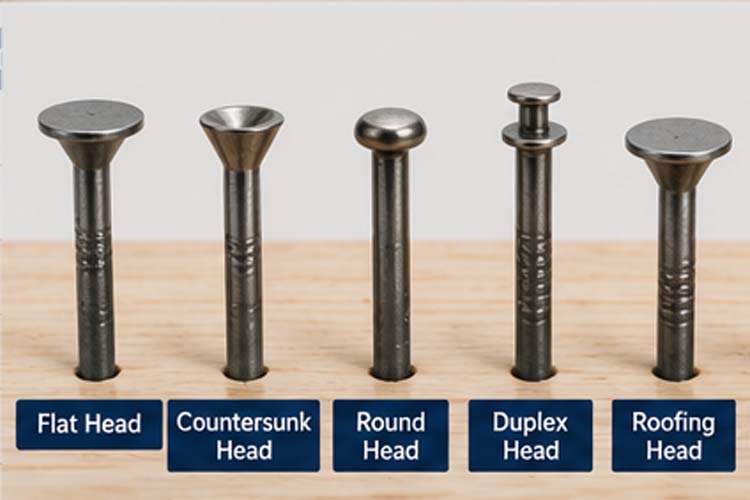
Flat Head Nails
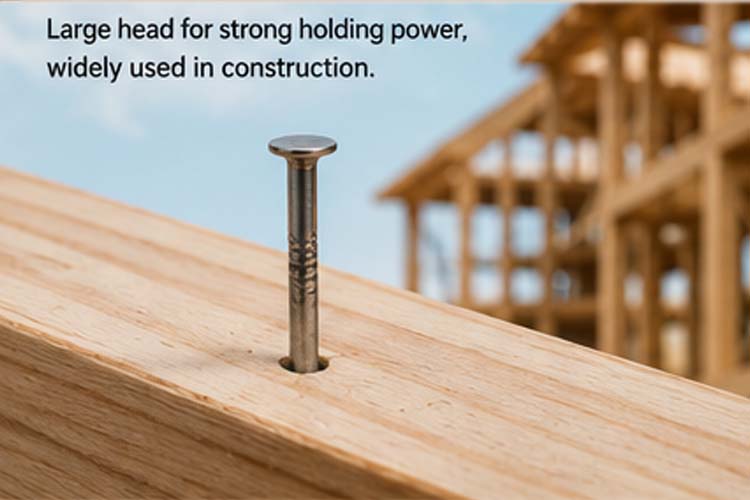
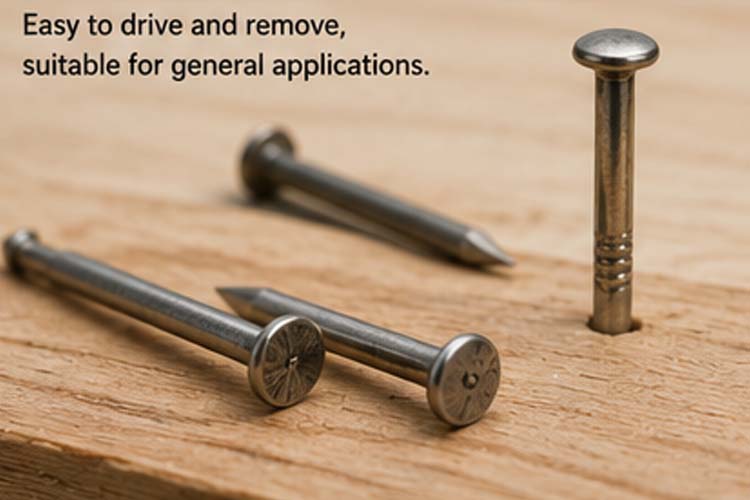
Flat head nails are the most common type used in general construction.
Characteristics
- Large contact surface
- Excellent holding power
- Easy to drive with a hammer
- Suitable for structural work
Common Applications
- House framing
- Wooden structures
- Pallets
- Crates
- General carpentry
Countersunk Head Nails
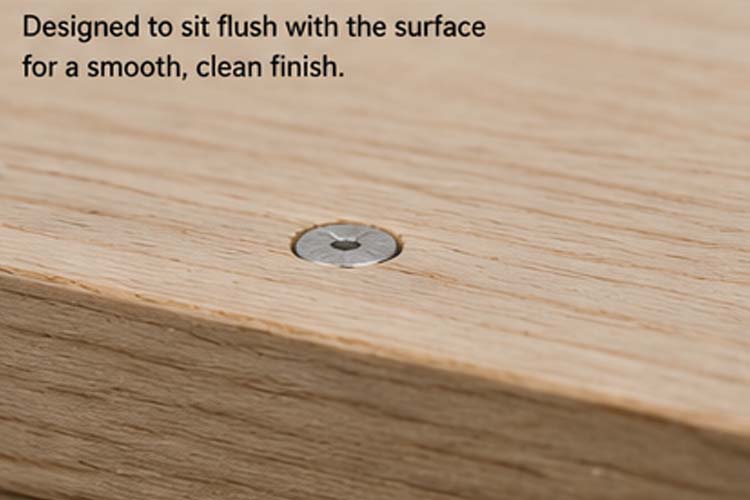
Countersunk heads are designed to sit flush with or below the material surface.
Benefits
- Smooth finished surface
- Easy to conceal with filler
- Improved appearance
Applications
- Furniture manufacturing
- Interior woodworking
- Decorative carpentry
- Cabinets
Round Head Nails
Round head nails provide strong fastening and are easy to remove when necessary.
They are commonly used in:
- General woodworking
- Packaging
- Temporary structures
- Construction projects
Duplex Head Nails
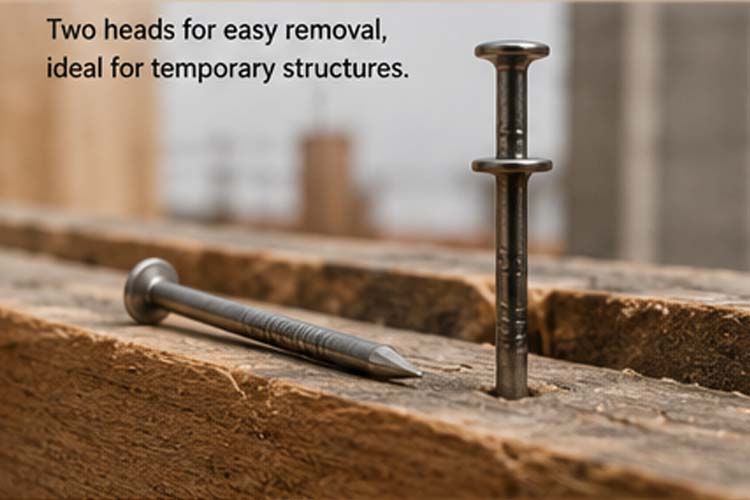
Duplex nails feature two heads.
Advantages
- Easy removal
- Temporary fastening
- Reusable applications
Typical Uses
- Concrete formwork
- Temporary fencing
- Scaffolding
- Construction support systems
Roofing Nail Heads
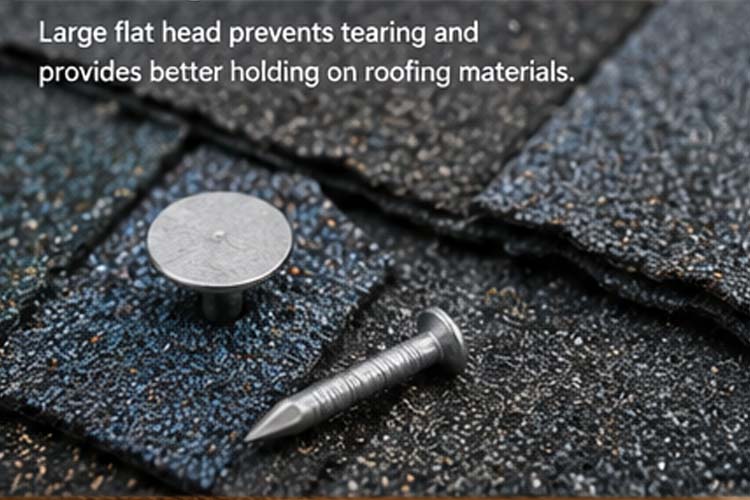
Roofing nails usually have oversized flat heads.
Advantages include:
- Better holding power
- Prevent roofing materials from tearing
- Improved weather resistance
Common applications include:
- Asphalt shingles
- Roofing felt
- Waterproof membranes
Decorative Nail Heads
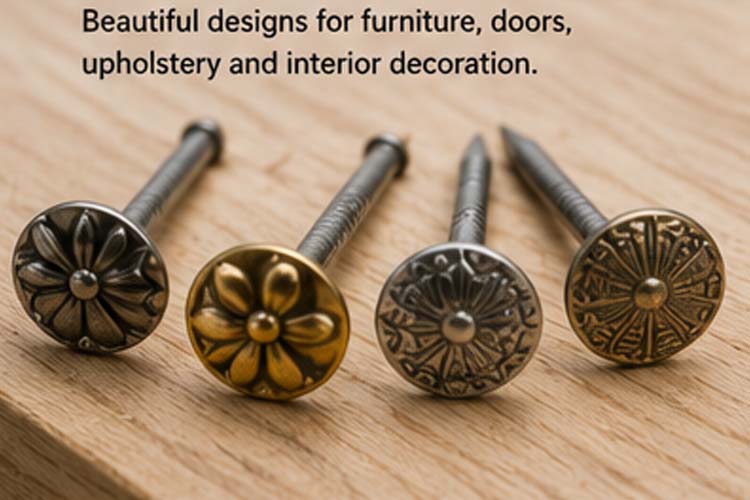
Decorative nails combine fastening with appearance.
They are often used in:
- Furniture
- Doors
- Upholstery
- Interior decoration
These nails are available in different shapes and finishes.
How Nail Heads Are Manufactured
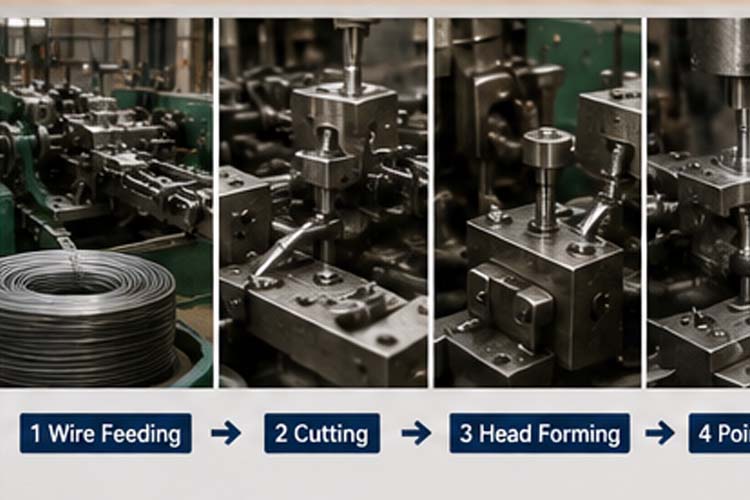
Modern automatic nail making machines form nail heads during the production process.
The process typically includes:
- Steel wire feeding
- Wire cutting
- Nail head forming
- Nail point shaping
- Quality inspection
- Packaging
Advanced equipment ensures every nail head has a consistent shape and size.
Quality Control
Manufacturers inspect nail heads for:
- Diameter
- Shape consistency
- Surface finish
- Crack resistance
- Head alignment
Routine inspection reduces defects and improves customer satisfaction.
How to Choose the Right Nail Head
When selecting a nail head type, consider:
- Material being fastened
- Required holding strength
- Surface appearance
- Indoor or outdoor use
- Installation method
Choosing the correct head improves both performance and project quality.
Frequently Asked Questions
Which nail head is best for construction?
Flat head nails are commonly used because they provide strong holding power and are easy to install.
Are countersunk nails stronger?
Not necessarily. They are primarily designed to create a smooth finished surface rather than increase holding strength.
Why do duplex nails have two heads?
The second head allows the nail to be removed easily after temporary construction work is completed.
Can automatic nail making machines produce different nail head types?
Yes. Modern machines can be configured to manufacture various head styles using different tooling.
Does nail head size affect performance?
Yes. Larger heads generally provide better pull-through resistance, especially in roofing and structural applications.