Home VIDEO High speed nail making machine Concrete Nails: Types, Applications, Manufacturing Process, and Buying Guide

High speed nail making machine

Concrete Nails: Types, Applications, Manufacturing Process, and Buying Guide

What Are Concrete Nails?

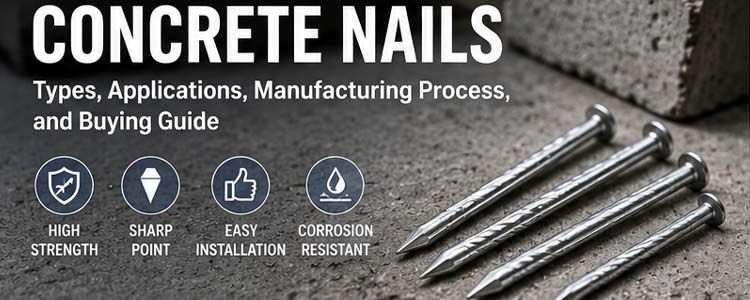
Concrete nails are hardened steel nails engineered for fastening into concrete or masonry without bending or breaking.

Compared with common wire nails, concrete nails feature:

  • Higher hardness
  • Greater bending resistance
  • Sharp diamond points
  • Strong penetration capability
  • Longer service life

Their unique design allows them to withstand the impact force required for installation into hard building materials.
alt="high strength concrete nails displayed on a concrete surface for construction and masonry fastening applications"


Common Types of Concrete Nails

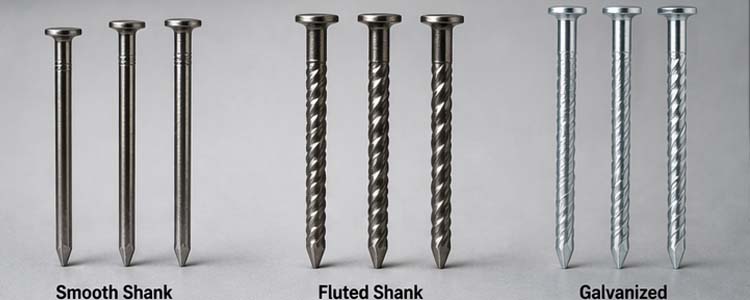
Smooth Concrete Nails

Smooth shank concrete nails are commonly used for general fastening tasks.

Typical applications include:

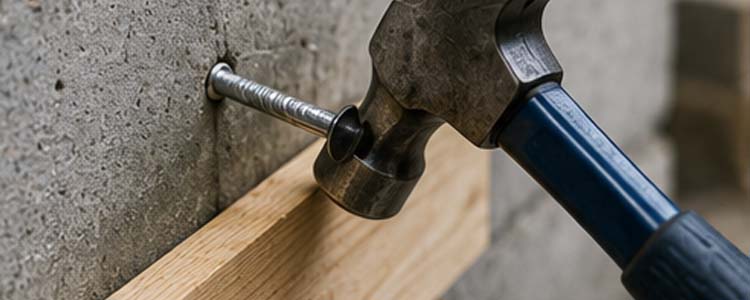
  • Wooden strips on concrete walls
  • Interior decoration
  • Temporary construction

Fluted Concrete Nails

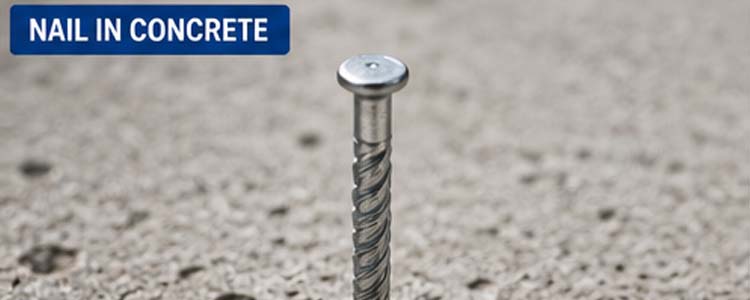
Fluted shanks increase holding power by improving friction between the nail and the concrete.

Advantages include:

  • Better pull-out resistance
  • Improved stability
  • Stronger long-term fastening

Galvanized Concrete Nails

Galvanized concrete nails feature a zinc coating that improves corrosion resistance.

Recommended for:
  • Outdoor construction
  • Humid environments
  • Coastal projects
  • Basement installations
  • alt="comparison of smooth shank fluted shank and galvanized concrete nails for different construction applications"

Materials Used

Most concrete nails are produced from:

Medium Carbon Steel

Provides a balance between hardness and toughness.

High Carbon Steel

Offers excellent strength and wear resistance for demanding applications.

Manufacturers carefully control heat treatment to achieve the required mechanical properties.
alt="hammer driving a concrete nail through a wooden strip into a concrete wall during building installation"


Manufacturing Process

Modern production typically includes:

  1. Steel wire preparation
  2. Wire drawing
  3. Nail forming
  4. Heat treatment
  5. Point grinding
  6. Surface treatment (optional galvanizing)
  7. Quality inspection
  8. Packaging

Automatic nail making machines combined with heat-treatment equipment ensure consistent quality and high production efficiency.
alt="fluted concrete nail securely fastened into a concrete surface providing strong holding power for structural support"


Quality Inspection

Reliable concrete nails should be inspected for:

  • Nail length
  • Diameter accuracy
  • Hardness
  • Straightness
  • Point geometry
  • Surface coating
  • Packaging quality

Comprehensive inspection helps reduce installation failures and improves customer satisfaction.
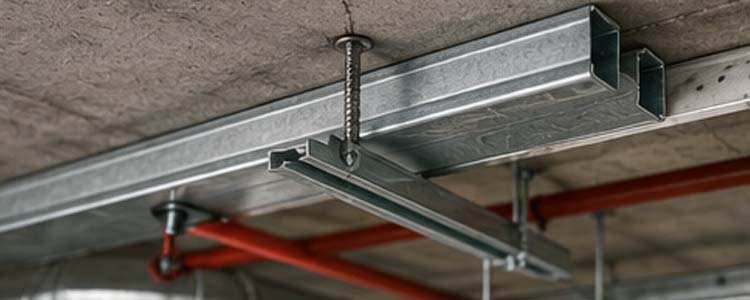
alt="concrete nails used to fasten metal channels and framing systems to reinforced concrete ceilings"


Common Applications

Concrete nails are widely used in:

  • Residential buildings
  • Office construction
  • Concrete walls
  • Brick structures
  • Ceiling installation
  • Wooden framing
  • Cable fixing
  • Interior renovation

Their versatility makes them one of the most commonly used fasteners in the construction industry.
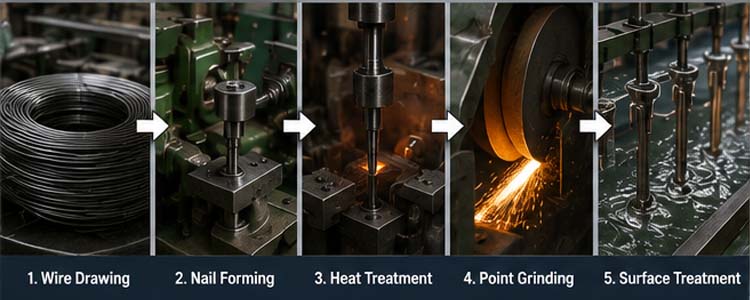
alt="automatic concrete nail manufacturing process including wire drawing nail forming heat treatment point grinding and surface coating"


How to Choose the Right Concrete Nails

Before purchasing, consider:

  • Concrete strength
  • Material thickness
  • Indoor or outdoor application
  • Corrosion resistance
  • Required load capacity
  • Installation method

Selecting the proper nail improves fastening reliability and reduces maintenance costs.
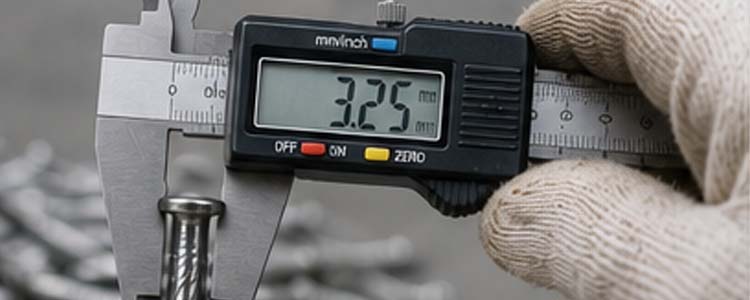
alt="factory technician measuring concrete nail dimensions with a digital caliper during quality control inspection"


Frequently Asked Questions

What makes concrete nails different from common wire nails?

Concrete nails are manufactured from harder steel and are specifically designed to penetrate concrete and masonry materials.

Can concrete nails be galvanized?

Yes. Galvanized concrete nails provide additional corrosion resistance for outdoor and humid environments.

Are concrete nails reusable?

Generally, no. Removing a concrete nail often damages both the nail and the surrounding material.

Can automatic nail making machines produce concrete nails?

Yes. With the appropriate tooling and heat-treatment process, modern nail making equipment can manufacture concrete nails efficiently.

Which steel material is commonly used?

Medium carbon steel and high carbon steel are the most common materials due to their excellent strength and hardness.
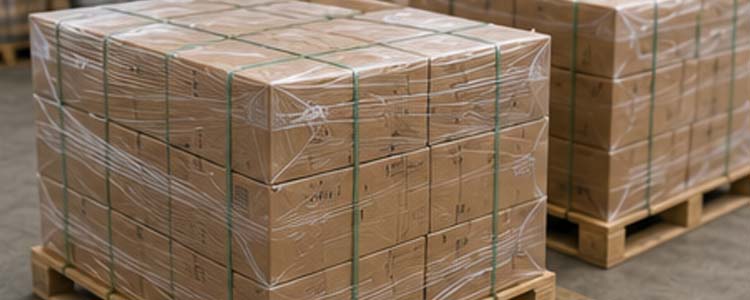
alt="packaged concrete nails prepared on wooden pallets for warehouse storage and international export shipment"